Plate & Proof

Section

Claims we checked

Headlines, packaging promises and internet certainties, held against the source document.

44 articles

Claims we checked

How peptide purity is measured, and why two assays disagree

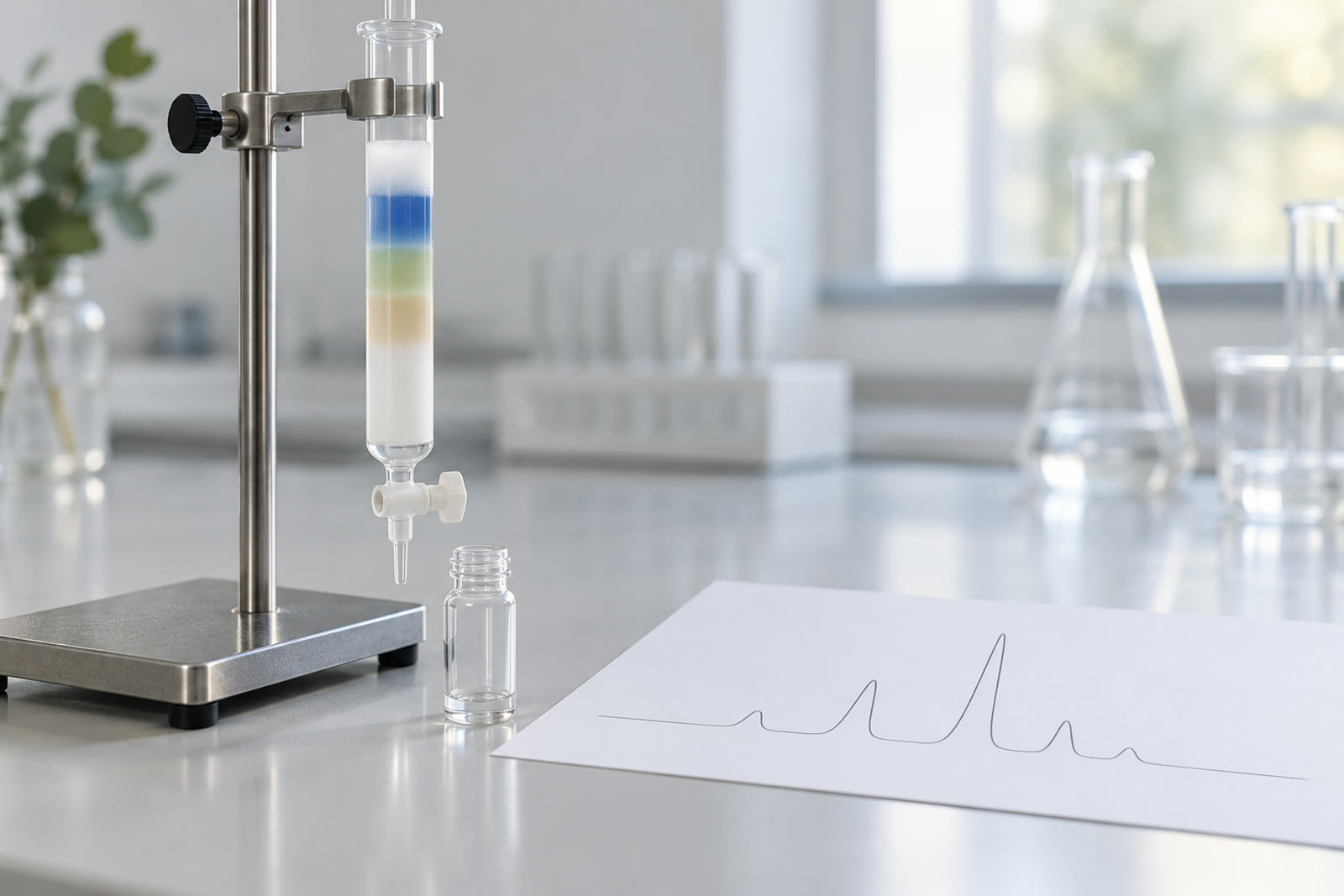
A chromatogram gives you an area percentage, not an identity. Mass spectrometry gives you an identity and a purity, but a different one. Detection is not identification, and an endotoxin number comes from a test that about a quarter of samples disagree with itself. Four documents, four different questions.

Claims we checked

Probiotics and the trials: biomarkers moved, outcomes did not

A 2019 meta-analysis of 16 randomized trials and 1060 people with diabetes found probiotic and synbiotic supplementation lowered hs-CRP (SMD -0.38) and malondialdehyde (SMD -0.61) and raised three antioxidant markers. Every one of those is a blood biomarker. None of them is a symptom. The same review notes the methodological quality varied across trials.
Claims we checked

Purity testing: what the assay shows and what it does not

A peptide certificate carries two numbers that are easy to confuse. Purity is the share of the correct molecule — usually reported above 95 %. Content is how much of that molecule is in the vial. A 2023 Pharm Res paper on reference standards shows why content-uniformity and value assignment are separate work, and a 2023 J Chromatogr B method resolves chirality down to 0.1 %.

Claims we checked

What a metabolic pen label claims, and what the retatrutide trials measured

A phase 2 trial of 338 adults reported a mean weight change of −24.2% at 48 weeks in the highest retatrutide group against −2.1% on placebo. A 2025 substudy with DXA scans found total fat mass down by more than a quarter in the higher groups, with a body-composition substudy of 103 people scanned twice. Neither paper says anything about a product sold under a research name.

Claims we checked

A purity report is not a certificate of analysis

A 2018 review notes that many multi-ingredient pre-workouts hide their amounts behind a proprietary blend, and that a supplement can carry banned substances as deliberate ingredients or as contaminants. A second review explains the regulatory gap: a supplement manufacturer is not required to submit evidence of safety and efficacy before selling. Neither paper can tell you what is in the vial you are holding; they tell you what a document cannot tell you either.

Claims we checked

Oxandrolone: what the trials found, and what the label promises

A 2004 review of oxandrolone in wasting and catabolic disorders found significant gains in body composition, strength and nutritional status across most well-designed trials — and simultaneously noted that it has never been studied in sarcopenia. The drug is also the only orally active anabolic steroid approved in the US, which tells you something about the alternatives.

Claims we checked

Third-party testing: what a certificate actually proves

Across 3 132 supplements analysed in a 2022 review, 875 contained substances that were not on the label, and a Dutch market survey found 38 percent of 66 high-risk sports supplements carrying undeclared stimulants and steroids. Independent testing exists, works, and settles far less than the word certificate implies.

Claims we checked

Creatine and the brain: what the randomized trials actually measured

Two 2023 and 2024 meta-analyses of randomized trials agree on memory and disagree about the rest. Sixteen RCTs, 492 adults: memory SMD 0.31, attention time and processing speed improved, overall cognition and executive function did not. Ten RCTs in healthy people: overall memory SMD 0.29, but SMD 0.88 in adults aged 66 to 76 against 0.03 in adults aged 11 to 31.

Claims we checked

Sugar alcohols and the gut: what the trials actually measured

The class marketed as gut-friendly is the one class the gastroenterology guidelines treat as a trigger. Polyols are a FODMAP category in their own right, low-FODMAP trials score 22.8 mm of global symptoms against 44.9 mm on the comparator diet, and a 2023 cohort links high erythritol to a 1.80 hazard ratio for major cardiovascular events. The dental benefit, meanwhile, is 13 per cent in low-quality evidence.

Claims we checked

Vitamin D and fractures: what the randomized trials measured

Twenty-five thousand eight hundred and seventy-one people, 1,991 fractures, and no effect: VITAL found a hazard ratio of 0.98 for total fractures on 2,000 IU of vitamin D a day. A JAMA meta-analysis of 33 trials and 51,145 people reached the same null. What the trials did find is a real change in bone density and a real rise in kidney stones.

Claims we checked

Detox diets: what the trials of the juice actually measured

A 78-person randomised trial gave one group half a litre of orange juice a day with a reduced-calorie diet and the other the same diet without it. Both lost the same weight. The biomarkers moved in the juice group — and the authors still wrote that juice did not improve insulin sensitivity or the lipid profile.

← Every article