Every macronutrient gets argued about endlessly. Water — the one with an actual official number — gets ignored. In 2010 EFSA set adequate intakes for total water (drinks plus the moisture already in food): 2.5 litres a day for men, 2.0 for women, under moderate conditions and moderate activity. Hot weather and hard training move both numbers up; a desk day in winter moves them down.
What “total water” actually includes
Roughly a fifth to a third of most people’s water arrives as food. Fruit, vegetables, yoghurt, rice, even bread contribute; only oils, sugar and dry snacks contribute nothing. So the glass-counting target is smaller than the headline number: for most diets, around 1.5–2 litres of actual drinks for men and 1.2–1.6 for women covers it.
The two checks that beat any app
First, thirst plus urine colour. Pale straw means the intake is about right; dark yellow means drink; completely clear all day means you can ease off. Second, the morning weigh-in for athletes only: a kilogram lost overnight is roughly a litre of fluid to replace. Everyone else can ignore that one.
What the number is not
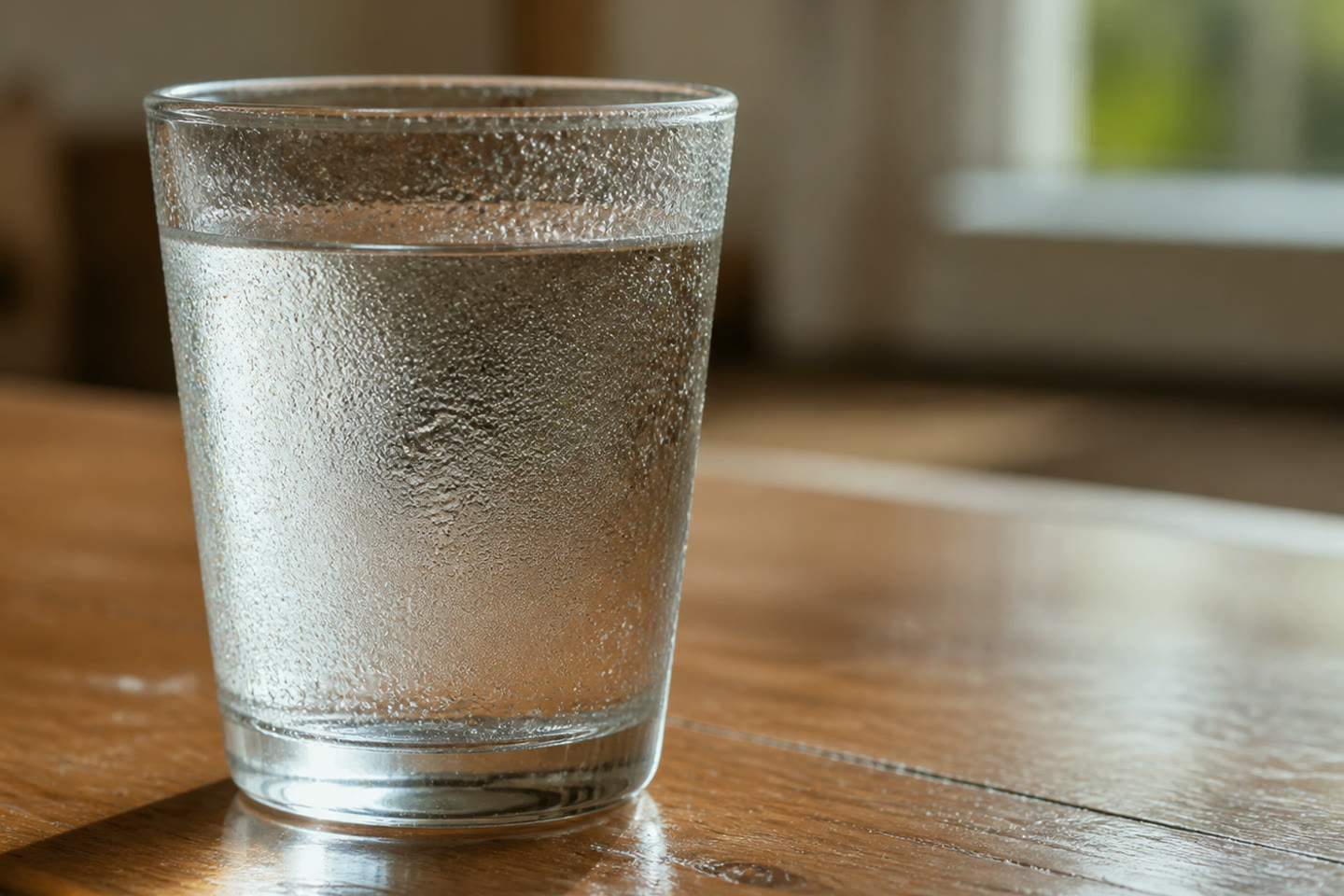
It is not eight glasses — that rule has no author and no evidence behind it. It is not a reason to force fluids past comfort; overdrinking to a schedule has its own (rare, real) risks around endurance events. And tap water in the UK and the EU is among the most tightly regulated foodstuffs there is, monitored against the same safety standards as anything bottled. The cheapest supplement shelf in the house is the tap.