“Ultra-processed” has moved in about a decade from a technical term in Brazilian nutrition research to a phrase on the front of British newspapers. The term is real, it is defined, and the definition is narrower and stranger than the public use of it.
What NOVA actually is
NOVA sorts food into four groups by the extent and purpose of the industrial processing applied to it:
- Unprocessed or minimally processed — fruit, vegetables, meat, milk, grains, eggs; drying, freezing, pasteurising allowed.
- Processed culinary ingredients — oil, butter, sugar, salt.
- Processed foods — group 1 plus group 2: bread made with flour, water, salt and yeast; cheese; tinned vegetables in brine.
- Ultra-processed — industrial formulations made largely or wholly from substances extracted from foods or synthesised, typically with additives used for colour, flavour, texture or palatability.
The crucial point is in that last definition: it is about formulation, not about nutrition. NOVA does not look at the nutrient content of a food at any point.
Why that produces odd results
Because it is a classification of industrial method, group 4 contains both things almost everyone would call junk and things almost nobody would:
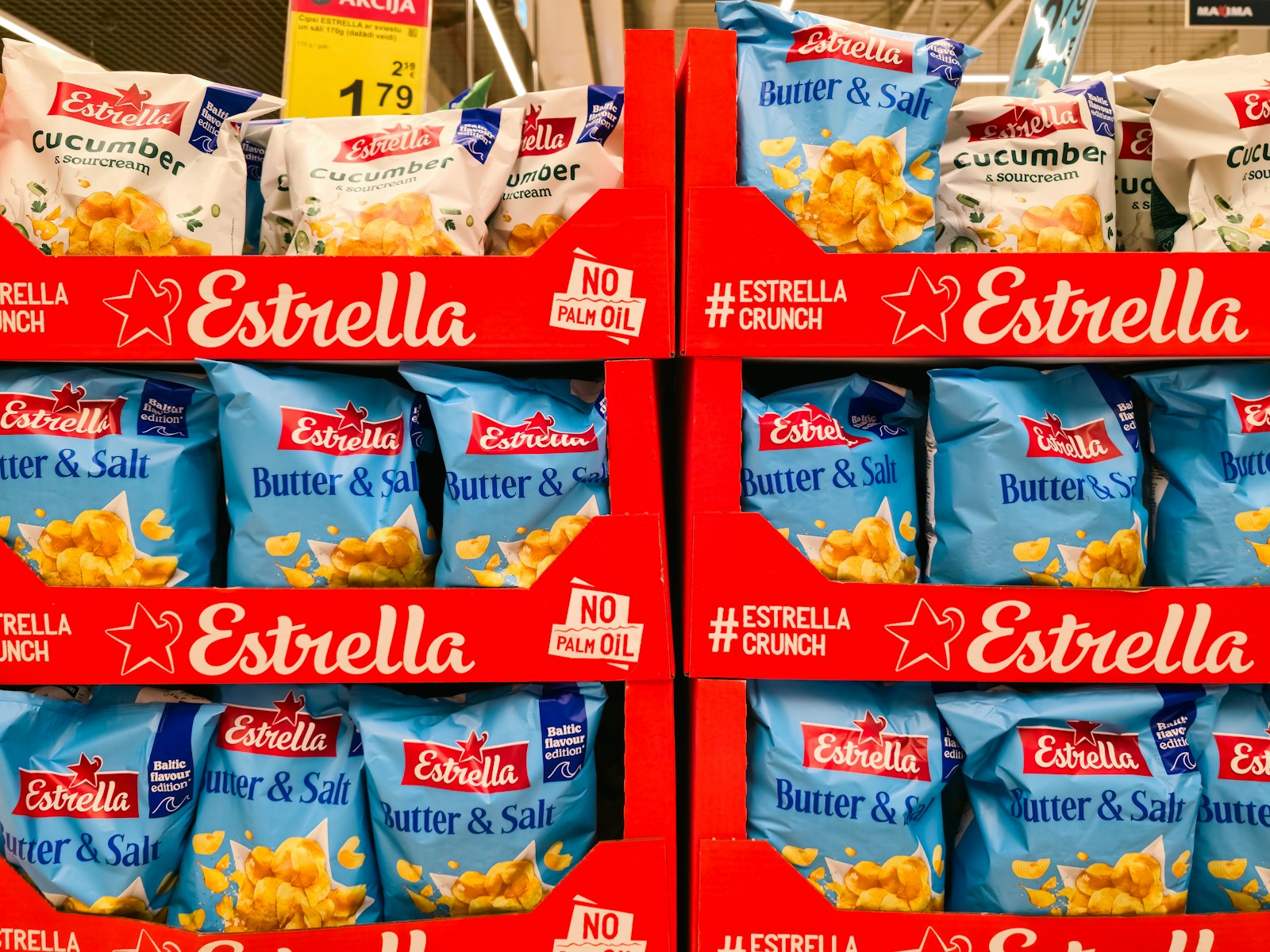
- Crisps, confectionery, soft drinks, most biscuits — yes.
- Supermarket wholemeal sliced bread, because of emulsifiers and improvers.
- Most plant-based milks, including fortified ones.
- Flavoured yoghurts, many breakfast cereals, most protein bars.
- Baked beans, in some readings.
A packaged wholemeal loaf and a bag of sweets sit in the same NOVA group. That is not a flaw in NOVA — it is doing exactly what it was designed to do — but it is a serious problem if the group is used as a shopping rule.
NOVA answers “how was this made?”. It was never designed to answer “should I eat this?”.
What the evidence shows, and its limit
Large observational cohorts consistently find that higher ultra-processed food intake is associated with worse outcomes — weight gain, cardiovascular disease, type 2 diabetes, mortality. That finding has replicated across countries and is not easily dismissed.
The open question is mechanism. Is it the processing itself — the additives, the emulsifiers, the physical structure? Or is it that group 4 in practice contains most of the energy-dense, sugary, salty, low-fibre food in the modern diet, and the association is the nutrients speaking through the category?
That distinction decides whether the right advice is “avoid ultra-processed food” or “eat less sugar, salt and refined starch and more fibre”. Both give the same answer for crisps. They give opposite answers for a fortified soya drink.
A usable position
Until the mechanism is settled, the honest version is this: the association is real, the category is imperfect, and the overlap between “ultra-processed” and “high in free sugars, saturated fat and salt, low in fibre” is very large.
So the practical move is not to memorise NOVA groups in the aisle. It is to read the back-of-pack table you already have — sugars, saturates, salt, fibre per 100 g — which sorts a wholemeal loaf from a packet of biscuits in about four seconds, and which NOVA, by design, will not do for you.