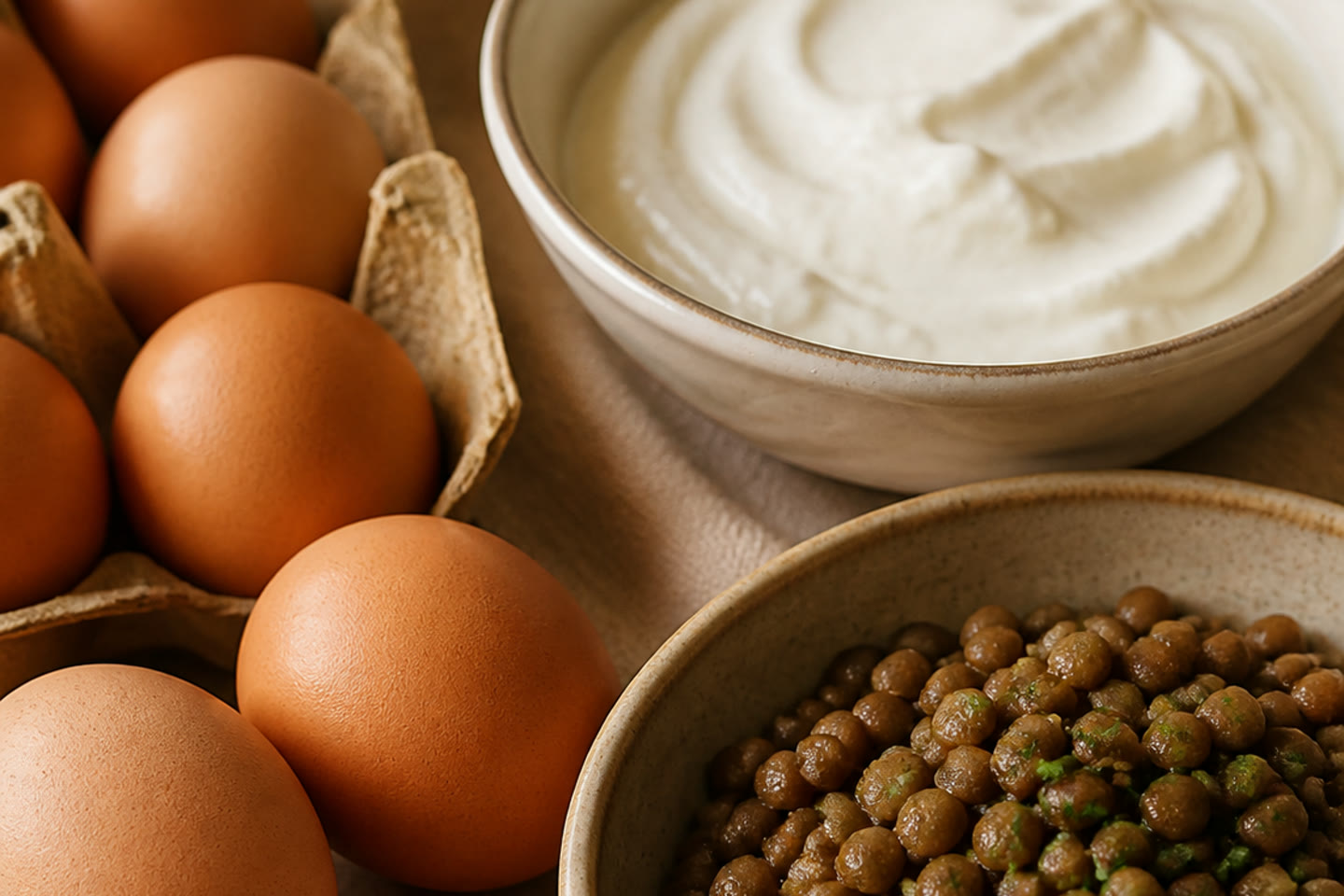
Protein is the most argued-about number in nutrition, which is odd, because for the general population it’s one of the most settled ones.
The reference number
The European Food Safety Authority (EFSA) sets the population reference intake for adults at 0.83 grams of protein per kilogram of body weight per day. For a 70 kg adult, that’s roughly 58 grams — the amount the evidence says meets the needs of nearly everyone in the healthy adult population.
Note what that number is: a reference for meeting needs, not a ceiling and not a target for every goal. It answers “how much is enough so my body isn’t short”, not “what’s optimal for my marathon block”.
What 58 grams looks like
Spread across a day, it’s unremarkable food:
- A pot of yogurt and a handful of nuts at breakfast
- A lentil soup and a slice of wholegrain bread at lunch
- A palm-sized piece of fish or chicken — or a plate of beans — at dinner
Most omnivores in Europe hit the reference value without trying. It’s a low bar by design.
Where the bigger numbers come from
Athletes, people training hard to build muscle, and older adults losing muscle mass are routinely advised more than the baseline — you’ll see figures well above 1 g/kg discussed in sports nutrition. Those are context-specific recommendations built on different questions, and they’re the reason gym forums and reference documents seem to disagree. They don’t; they’re answering different things.
The practical takeaways
- If you’re a generally healthy adult eating varied meals, you almost certainly clear the reference intake already.
- If you train seriously, more than the baseline is a reasonable topic — for a conversation grounded in your sport, not a universal rule.
- Protein timing windows, powders and “anabolic” marketing sit far downstream of the boring fundamentals: total intake, over months, from food you’ll actually keep eating.
As always on this site: the number came from the source below, not from us.