EFSA sets the population reference intake for calcium at 1,000 mg a day for adults aged 18 to 24, dropping to 950 mg from 25 onwards. The step down is not arbitrary: peak bone mass is still being accumulated into the early twenties, and after that the job changes from building to maintaining.
Why dairy dominates the conversation
Because it is efficient. Milk, yoghurt and cheese carry a lot of calcium per serving, in a form that is well absorbed, in foods people already eat daily. A glass of milk and a pot of yoghurt cover a substantial fraction of the day’s requirement without any planning at all.
That is a practical advantage, not a nutritional monopoly. Nothing about calcium requires it to arrive from a cow.
The non-dairy routes that actually work
Three of them carry meaningful amounts:
Fortified plant drinks. Most soya, oat and almond drinks sold in Europe are fortified with calcium to roughly the level of cow’s milk. This is the single easiest substitution, and it comes with one catch worth knowing: organic products in the EU generally cannot be fortified, so an organic oat drink typically contains almost no calcium. Check the back of the carton — the figure is printed there.
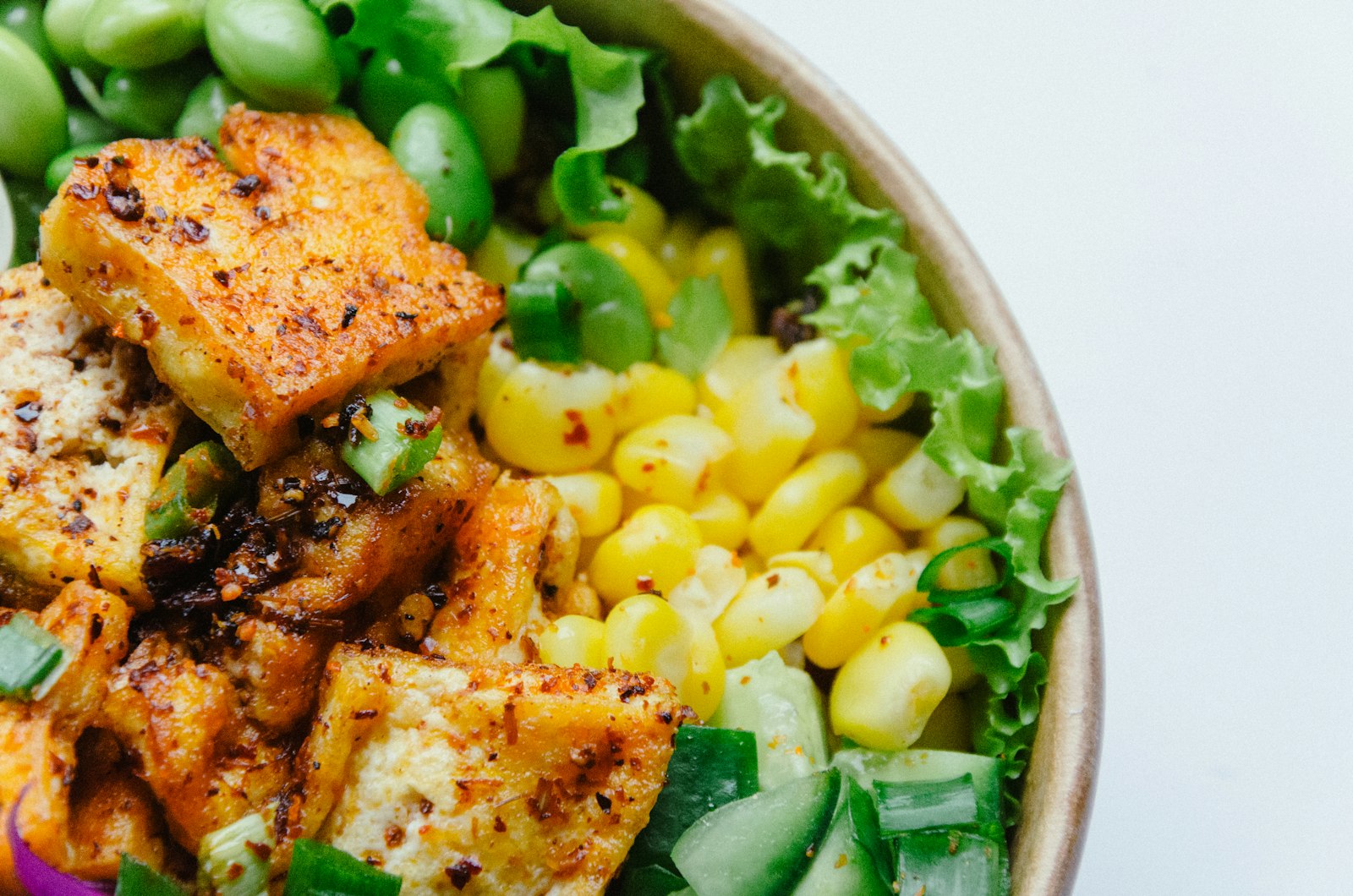
Tofu set with calcium salts. Firm tofu coagulated with calcium sulphate is a genuinely rich source. The ingredients list will say calcium sulphate or E516; tofu set with magnesium chloride (nigari) will not.
Brassicas, sesame and pulses. Kale, pak choi, broccoli, watercress; tahini and sesame seeds; white beans and chickpeas. The per-portion amounts are smaller than dairy, and absorption from low-oxalate greens like kale is actually very good — better, per gram, than from milk.
Spinach, rhubarb and beet greens are the exception that keeps this from being a simple rule: they contain calcium bound to oxalate, and very little of it gets absorbed.
The bit that is not calcium
Calcium intake on its own is a partial answer. Absorption depends on vitamin D, and the skeleton responds to mechanical loading — which is to say that walking, running and lifting things do more for adult bone than the difference between 900 and 1,100 mg a day.
The bone story is calcium, vitamin D and load. Optimising one and ignoring the other two is the usual mistake.
A day that gets there, roughly
Without dairy, and without anything unusual:
- 250 ml fortified plant drink on cereal
- 100 g calcium-set tofu in a stir-fry with pak choi
- a tablespoon of tahini in a dressing
- a handful of almonds
That combination lands in the right region. The exact figure depends on the brand, which is the honest answer to most questions of this shape.
Supplements, and why food comes first
Calcium supplements have a mixed record. They raise intake reliably, and the evidence for high-dose supplementation reducing fractures in otherwise well-nourished adults is weaker than the marketing suggests; there has also been a long-running and unresolved argument about cardiovascular effects at high supplemental doses. Food-derived calcium carries none of that baggage and arrives with protein, potassium and magnesium attached.
If intake is genuinely low — a dairy-free diet built on unfortified products is the common case — that is a conversation with a doctor or dietitian, who can also check the vitamin D side of the equation rather than guessing at it.